 Entertix.ro
 Piletilevi.ee
 Bilešuserviss.lv
 Bilietai.lt


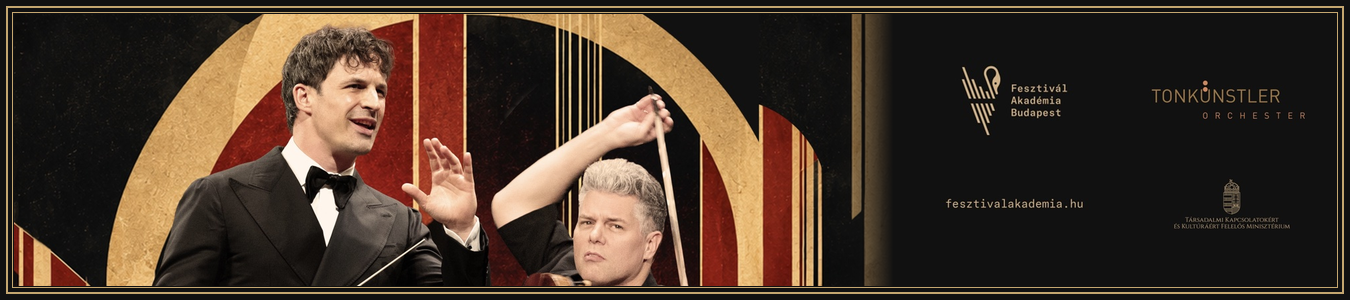
Barnabás Kelemen and the Tonkünstler Orchestra Starts
According to Kodály’s recollections, he spent the happiest years of his childhood in Galánta. Inspired by the music of the local Gypsy musicians, he later drew on melodies from a collection of Galánta dances published in Vienna for his 1933 orchestral work.
Following this folk-inspired musical thread, Bartók’s Rhapsody No. 2 for Violin and Orchestra incorporates Romanian, Ruthenian and Hungarian melodies, followed by his Violin Concerto No. 1, which remained unknown for many years. Although composed during Bartók’s youth, the concerto was only brought to public attention after the death of his first love and the work’s dedicatee, violinist Stefi Geyer, in 1956. Defying the conventional form of the concerto, it consists of just two movements of markedly contrasting character.
The concert concludes with Schubert’s Symphony known as the “Great C Major”, which was discovered by Robert Schumann. In this work, Schubert treats the instruments almost as if they were singing voices, creating a unique and captivating sound world.
Trends
1. 50 YEARS OF BONEY M - Pe 15 decembrie, la Sala Palatului, legenda disco Liz Mitchell, vocea originală a celebrului grup Boney M., revine în fața publicului din România într-un spectacol aniversar dedicat celor 50 de ani de muzică și succes internațional. 2. Micul Print - MICUL PRINȚ ajunge la Iasi, pe 9 noiembrie 2026 și Sibiu, pe 23 noiembrie 2026, într-o versiune creată pentru oamenii mari. Oana Pellea și Lari Giorgescu dau viață acestei călătorii printr-un spectacol în care forța interpretării transformă un text bine cunoscut într-o experiență profundă și personală.
