Entertix.ro
 Piletilevi.ee
 Bilešuserviss.lv
 Bilietai.lt

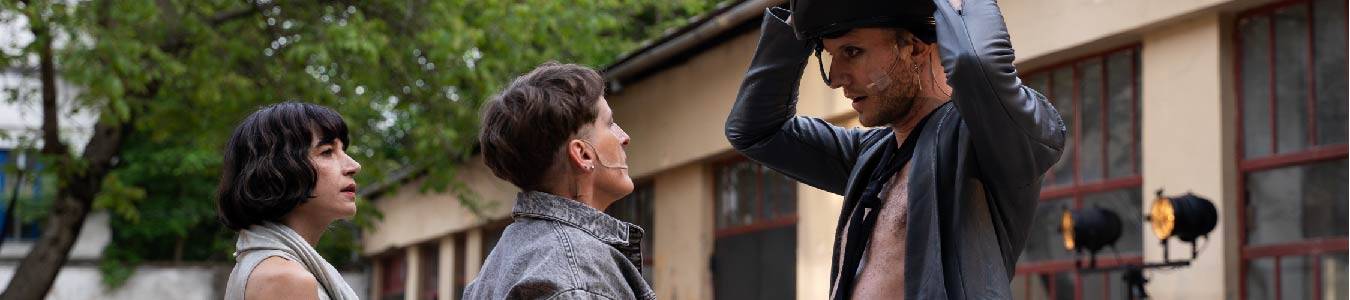
DRAMA NIGHT 1
Konzept and Gesamtleitung / Conceptul și coordonarea / Concept and coordination: Irisz Kovacs & Clemens Bechtel
Daur / Durata / Duration: 2h
Untertitelt / Subtitrare / Surtitles: RO/EN
Empfohlen / Recomandat / Recommended: 17+
Ausstattung / Scenografia / Scenography: Ioana Popescu
Choreografie / Coregrafia / Choreography: Viktoria Medwedewa
Dramaturgie / Dramaturgia / Dramaturgy: Mira Țâra
Musikalische Begleitung / Pregătirea muzicală / Musical Training: Roxana Ardeleanu
Maske / Machiaj / Make-up: Bojita Ilici
Ausstattungsassistenz / Asistență de décor / Sets Assistance: Harald Weiss
DIE POLITIKER / POLITICIENII / THE POLITICIANS
Inszenierung: Teamarbeit / Regia colectivă / Collective Direction
Mit / Cu / With: Isolde Cobeț, Alma Diaconu, Boris Gaza, Rareș Hontzu, Bülent Özdil, Daniela Török, Oana Vidoni, Harald Weisz
DE
In diesem Text, der sich schwer einem Genre zuordnen lässt und sich an der Grenze zwischen Lyrik und Drama befindet, dekonstruiert Wolfram Lotz den Begriff „Politiker” durch die übertriebene Wiederholung des Wortes. Dadurch wird eine komische, teilweise auch irritierende Ebene des Absurden erreicht. Das Werk basiert auf einem langfristigen Projekt des Autors: 2018 hatte er die Arbeit an einem „Totaltagebuch“ begonnen, das sein Leben ununterbrochen und bis ins Detail dokumentieren sollte. Überwältigt von dem Gedanken, ob er ein derart persönlich geprägtes Werk veröffentlichen sollte, löschte Lotz die Datei und schrieb 2022 den Roman Heilige Schrift I, der Teile vom Tagebuch enthält. Aus den Politikern wurde dagegen ein Theatergedicht, in dem Lotz philosophische Reflexionen, metafiktionale Passagen und Witze in spielerisch-poetischer Form zusammenführt.
RO
În acest text ce refuză încadrarea într-un gen literar, fiind la granița dintre liric și dramatic, Wolfram Lotz deconstruiește termenul de „politicieni” prin repetare exagerată, până când atinge un nivel de absurditate comică și chiar iritantă. Opera se bazează pe un proiect de lungă durată al autorului, care își propusese în 2018 să scrie un „jurnal total”, care să îi urmărească viața neîntrerupt și în detaliu. Un an mai târziu, copleșit de gânduri îndoielnice privind justificarea publicării unor scene atât de personale, a șters documentul și a scris în 2022 romanul Sfânta Scriptură I pornind de la acest jurnal. Politicienii, în schimb, a devenit o poezie dramatică, în care Lotz combină reflexii filozofice, pasaje metaliterare și glume, într-o formă poetică jucăușă.
EN
In this text, which resists classification within a single literary genre—hovering at the boundary between the lyrical and the dramatic—Wolfram Lotz deconstructs the term “politicians” through exaggerated repetition, pushing it to a level of comic and even irritating absurdity. The work is based on a long-term project of the author, who in 2018 set out to write a “total diary” that would document his life continuously and in detail. A year later, overwhelmed by doubts about the justification of publishing such deeply personal scenes, he deleted the document and, in 2022, wrote the novel Holy Scripture I, drawing on that diary. The Politicians, however, became a dramatic poem in which Lotz combines philosophical reflections, metaliterary passages, and jokes in a playful poetic form.
*
GERMAN SONG NIGHT
Mit / Cu / With: Dana Borteanu, Roxana Ardeleanu
*
LAIOS
Inszenierung / Regia / Direction: Alexandru Mihăescu
Mit / Cu / With: Yannick Becker, Ioana Iacob, Marc Illich, Ida Jarcsek-Gaza, Alexandru Mihăescu, Simona Vintilă, Radu Vulpe.
DE
Nach einer langen Zeit politischer Instabilität und blutiger Machtwechsel braucht Theben einen König. Sie setzen Laios, den letzten Nachkommen des Stadtgründers Kadmos, auf den Thron, in der Überzeugung, dass sie damit eine traditionelle Wahl treffen, eine sichere Wahl, die die Gemüter beruhigen und Stabilität bringen wird. Laios ist jedoch eine für diese Rolle völlig ungeeignete Persönlichkeit: egozentrisch und exzentrisch, selbst Opfer einer blutigen Kindheit in Theben, wird er schon in jungen Jahren ins Exil geschickt, wo er den jungen Kryssippos aus seiner Adoptivfamilie entführt, um mit ihm in die Welt zu fliehen. Als er an die Spitze von Theben gelangt, ohne dies wirklich zu wollen, vernachlässigt er seine Pflichten und wird besessen von dem Orakel, das ihm verbietet, mit Iokaste ein Kind zu zeugen. Gemeinsam trotzen sie den Göttern, denn Iokaste, die wunderbare Königin, die viel besser als Laios geeignet ist, Stabilität zu bringen (aber wer sieht das schon?), ist ebenfalls eine tragische Figur, die einen Teil der Schuld trägt: Sie kann sich kein anderes Leben vorstellen als das, das ihr die thebanische Gesellschaft vorgeschrieben hat. Ihre Mission ist es also, ein Kind zur Welt zu bringen, und sie wird diese Mission um jeden Preis erfüllen. Der polimorfe Text von Roland Schimmelpfennig scheint diese biografische Lücke füllen zu wollen und lädt uns in einen spielerischen Raum ein, um ein Rätsel wie das der Sphinx zu lösen, in dem die Schauspieler gemeinsam mit dem Publikum den Mythos eines fiktiven Laios erzählen. Es ist ein Spiel, das manchmal überraschend von einem ernsten und tragischen Ton zu einem gegenkulturellen oder trashigen Punk-Diskurs übergehen kann, aber es geht weiterhin darum, dass die Figuren – Laios, Iokaste, der entführte junge Cryssipus – ein mögliches Gleichgewicht zwischen individueller Freiheit und Verantwortung gegenüber der Gruppe finden. Das Ignorieren des Orakels hätte klar definierte Folgen für die Polis, und der zweite Teil des Stücks ist eine Galerie von Fehlschlägen, in der die Figuren vier verschiedene Szenarien durchspielen, von denen sich keines als akzeptabel erweist. Das Zusammensetzen dieses Puzzles bringt subversive Ideen und Einstellungen zum Vorschein, die wir wiedererkennen und die im Kontext unserer aktuellen Bedürfnisse nach Freiheit, Zugehörigkeit, Sicherheit und Gleichberechtigung tatsächlich den tragischen Konflikt zwischen schnellem Fortschritt und Konservatismus widerspiegeln, der in der heutigen Gesellschaft so akut ist.
RO
După o lungă perioadă de instabilitate politică și răsturnări sângeroase ale puterii, Teba are nevoie de un conducător. Îl vor aduce pe tron pe Laios, ultimul din linia lui Cadmos, fondatorul orașului, crezând că în felul acesta fac o alegere care este în acord cu tradiția, o alegere sigură care va calma spiritele și va aduce stabilitate. Laios este însă un personaj cum nu se poate mai nepotrivit pentru acest rol: autocentrat și excentric, el însuși victima unei copilării sângeroase în Teba, este trimis de mic în exil şi aici îl răpește pe tânărul Cryssipus de la familia sa adoptivă pentru a fugi cu el în lume. Ajuns la conducerea Tebei fără să-și dorească acest lucru cu adevărat, își neglijează obligațiile și devine obsedat de oracolul care îi interzice să facă un copil cu Iocasta. Împreună îi vor sfida pe zei deoarece Iocasta, regină minunată, mult mai potrivită decât Laios pentru a aduce stabilitatea (dar cine vede?), este și ea un personaj tragic care poartă o parte din vină: nu poate concepe o altă viață decât cea pe care i-a prescris-o societatea tebană. Misiunea ei, altfel spus, este să aducă un copil pe lume iar ea și-o va îndeplini cu orice preț. Textul polimorf scris de Roland Schimmelpfennig pare menit să acopere această lacună biografică și ne invită într-un spațiu ludic pentru a rezolva o ghicitoare precum cea dată de Sfingă, în care actorii articulează împreună cu publicul mitul unui Laios fictiv. Este un joc care poate trece, uneori surprinzător, de la un ton serios și tragic la un discurs contracultural sau trash punk, dar miza rămâne în găsirea de către personaje - Laios, Iocasta, tânărul răpit Cryssipus - a unui posibil echilibru între libertatea individuală și responsabilitatea față de grup. Ignorarea oracolului ar avea urmări clar definite pentru polis, iar partea a doua a spectacolului este o galerie de eşecuri în care personajele explorează patru scenarii diferite şi niciunul nu se dovedeşte acceptabil. Asamblarea acestui puzzle scoate la iveală subversiv idei şi atitudini pe care le recunoaştem şi care, în contextul nevoilor noastre actuale legate de libertate, apartenență, siguranţă şi egalitate în drepturi, reflectă de fapt tragicul conflict între progresismul rapid și conservatorism, atât de acut în societatea de azi.
EN
After a long period of political instability and bloody coups, Thebes needs a leader. They will bring Laius, the last in the line of Cadmus, the founder of the city, to the throne, believing that in this way they are making a choice that is in accordance with tradition, a safe choice that will calm spirits and bring stability. However, Laius is the most unsuitable person for this role: self-centered and eccentric, himself the victim of a bloody childhood in Thebes, he is sent into exile at a young age, where he kidnaps the young Cryssipus from his adoptive family to run away with him into the world. Having come to rule Thebes without really wanting to, he neglects his duties and becomes obsessed with the oracle that forbids him to have a child with Jocasta. Together they will defy the gods because Jocasta, a wonderful queen, much more suited than Laius to bring stability (but who can see that?), is also a tragic character who bears some of the blame: she cannot conceive of a life other than the one prescribed for her by Theban society. Her mission, in other words, is to bring a child into the world, and she will fulfill it at any cost. Roland Schimmelpfennig's polymorphic text seems intended to fill this biographical gap and invites us into a playful space to solve a riddle like the one given by the Sphinx, in which the actors articulate the myth of a fictional Laius together with the audience. It is a game that can shift, sometimes surprisingly, from a serious and tragic tone to a countercultural or trash punk discourse, but the stakes remain in the characters' search—Laius, Jocasta, the kidnapped young Cryssipus—for a possible balance between individual freedom and responsibility to the group. Ignoring the oracle would have clearly defined consequences for the polis, and the second part of the show is a gallery of failures in which the characters explore four different scenarios, none of which prove acceptable. Putting this puzzle together subversively reveals ideas and attitudes that we recognize and that, in the context of our current needs for freedom, belonging, security, and equal rights, actually reflect the tragic conflict between rapid progressivism and conservatism, so acute in today's society.
*
Ein Teil des Projekts „Drama Nights“ findet im Freien statt, sodass bei Regen oder ungünstigem Wetter folgende Regelung gilt: Wenn es vor Vorstellungsbeginn zu regnen beginnt, wird die Aufführung verschoben und die Karten behalten ihre Gültigkeit. Die Zuschauer können auch eine Rückerstattung des Kartenpreises beantragen oder die Karten gegen Karten zu einer anderen Vorstellung des Deutschen Staatstheaters Temeswar tauschen. Beginnt es während der Aufführung zu regnen, wird diese unterbrochen und nach Ende des Regens fortgesetzt. Ist eine Fortsetzung nicht möglich, wird die Vorstellung abgesagt. Eine Verschiebung findet nicht statt und der Ticketpreis wird nicht zurückerstattet.
O parte a proiectului Drama Nights se desfășoară în aer liber, astfel că în caz de ploaie sau vreme nefavorabilă, va funcţiona următoarea regulă: – dacă ploaia începe înaintea orei de spectacol, reprezentaţia se reprogramează, biletele rămânând valabile. Spectatorii pot opta și pentru restituirea banilor pe bilete, sau pentru schimbarea acestora pentru un alt spectacol din programul Teatrului German de Stat. Dacă ploaia începe în timpul reprezentaţiei, spectacolul se va întrerupe și se va relua la oprirea acesteia. Dacă reluarea nu este posibilă, iar spectacolul se suspendă, acesta nu se reprogramează și nici nu se rambursează costul biletului.
The Drama Nights project takes place outdoors, so in case of rain or unfavorable weather, the following rules apply: if it starts raining before the scheduled performance time, the show will be rescheduled and tickets will remain valid, with spectators having the option to request a refund or exchange their tickets for another performance from the German State Theatre’s program; if it starts raining during the performance, the show will be interrupted and will resume once the rain stops, and if resuming is not possible and the show is suspended, it will not be rescheduled and ticket costs will not be refunded.
Trends
1. FREEDOM a tribute to George Michael - Turneu regional cu ocazia împlinirii a 10 de ani de la plecarea legendei muzicale! Un tribut lui George Michael, un spectacol dedicat unuia dintre cei mai influenți artiști pop din toate timpurile. 2. Blackbriar - A Thousand Little Deaths Tour - Blackbriar ajunge la București pe 27 septembrie, pentru un concert la Quantic. Turneul promovează cel mai nou album al formației, A Thousand Little Deaths, un material ce explorează teme precum iubirea, pierderea și moartea prin imagini cinematice, versuri captivante și puternice sonorități symphonic metal. 3. 50 YEARS OF BONEY M - Pe 15 decembrie, la Sala Palatului, legenda disco Liz Mitchell, vocea originală a celebrului grup Boney M., revine în fața publicului din România într-un spectacol aniversar dedicat celor 50 de ani de muzică și succes internațional.